
Table of Contents
- Introduction
- The Root Cause: Adding AI to Broken Processes
- Common Reasons AI Implementations Fail
- Lessons from the Field: What Worked Instead
- Practical Steps to Avoid Failure
- Conclusion
Intorduction
AI is no longer a futuristic concept—it’s here and now. Yet, despite the urgency and hype, most AI implementations in daily business operations fail to deliver promised value. Why is that? Having lived through scaling partner ecosystems and applying AI strategies hands-on, this post unpacks the hard truths about AI failures and practical steps to avoid them.
The Root Cause: Adding AI to Broken Processes
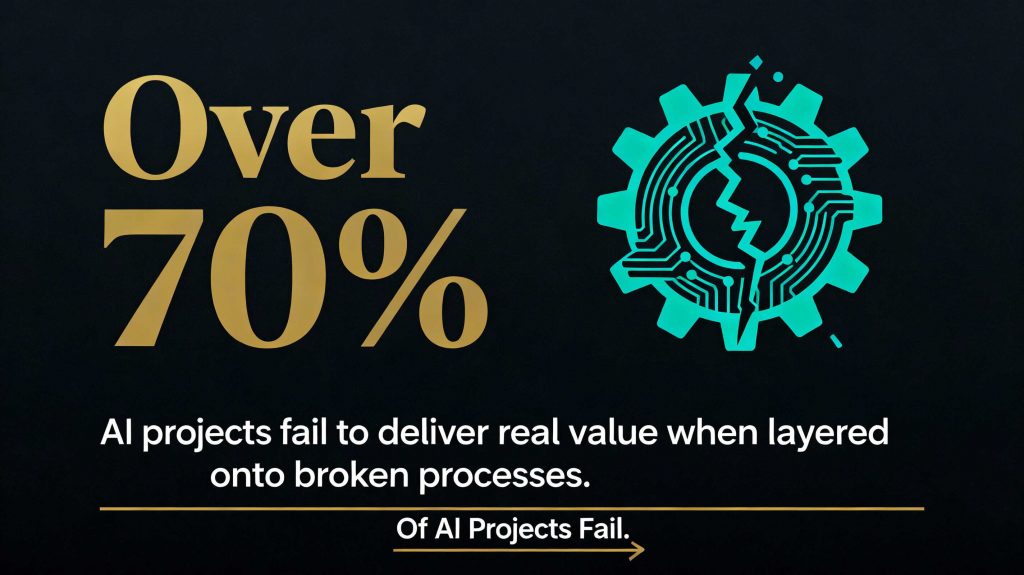
One of the biggest reasons AI initiatives fail is because organizations try to layer AI onto existing flawed or inefficient processes. AI can amplify problems if processes are not optimized first. Simply automating or “AI-enabling” what doesn’t work to begin with leads to wasted investment and disillusionment.
Common Reasons AI Implementations Fail
- Lack of Clear, Business-Driven Objectives: AI pilots are often technology-led rather than aligned with specific business outcomes.
- Overestimating AI’s Immediate Impact: Expecting AI to be a silver bullet without foundational work and change management.
- Ignoring Partner Ecosystem Complexity: Failing to integrate AI within the broader ecosystem context, especially for multi-partner strategies.
- Insufficient Executive and Team Buy-In: AI initiatives require leadership sponsorship and motivated teams aligned on the vision.
- Poor Data Quality and Governance: Garbage in, garbage out; AI needs high-quality, well-governed data to succeed.
Lessons from the Field: What Worked Instead
From leading partner ecosystems that grew 1714% and authoring AI strategy for startups, here are what successful initiatives have in common:
- Start with process redesign, not just tech.
- Define measurable outcomes and ROI upfront.
- Engage all stakeholders early, from GTM leaders to partner managers.
- Build governance models that ensure data accuracy and ethical AI use.
- Treat AI as an enabler that enhances human decision-making, not replaces it.
Practical Steps to Avoid Failure
- Conduct an honest process audit before AI selection.
- Align AI goals with specific partner ecosystem needs and business KPIs.
- Invest in change management and communication—build trust in AI tools.
- Prioritize data governance and continuous monitoring of AI outcomes.
- Pilot with scalable, incremental deployments rather than big bang launches.
Conclusion
The promise of AI in daily business operations is real, but success demands hard work, discipline, and a strategic lens that looks beyond the technology glitter. Organizations that avoid the common pitfalls and lead with business-first AI strategies will unlock remarkable growth and partnership value.
Hi, this is a comment.
To get started with moderating, editing, and deleting comments, please visit the Comments screen in the dashboard.
Commenter avatars come from Gravatar.